The fever came down
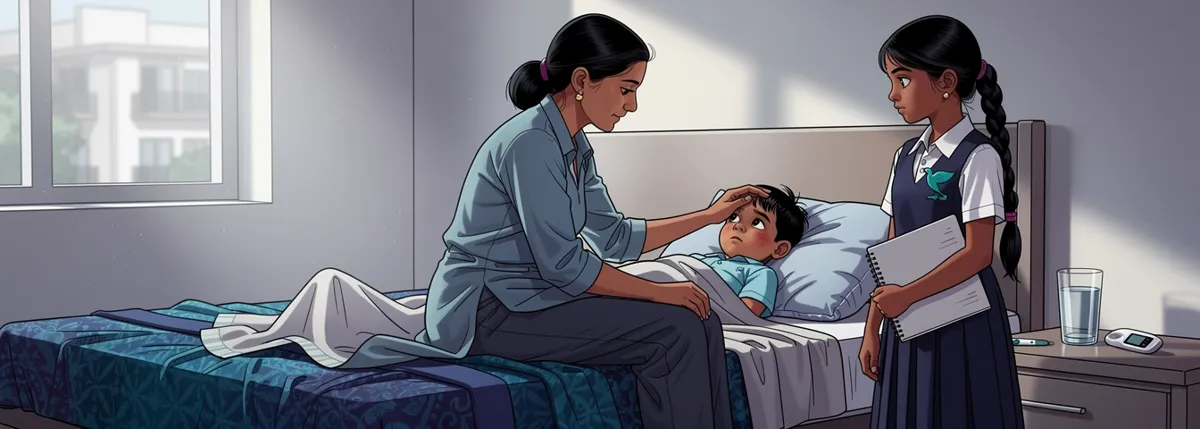
Ammu had a fever. He is four. He was hot and cross and would not eat.
Amma gave him the fever medicine. An hour later the fever came down. He sat up and asked for a banana.
By evening the medicine had worn off. The fever was back.
The idea
The medicine changed the fever. It did not change what the fever was pointing at.
People who study this have a rule for it.
The idea
Alarms are signals with false-alarm rates; silencing one is not repair, and palliation is legitimate when you know which you are buying.
An alarm is not the trouble. It is a signal about the trouble. It points at something else.
The fever is not the illness. It is the body’s alarm about an illness. The smoke alarm is not the fire. It points at smoke. Sometimes an alarm rings and nothing is there. The smoke alarm in the school lab went off once because of the canteen’s tawa. Nothing was on fire. That is a false alarm. Every alarm gives a few. So you look at what it points at, not only at the alarm.
There are two ways to make an alarm stop. Fix the thing it points at, so there is nothing left to point at. Or cover the alarm, while the thing stays.
Both are quiet. Only one is repair.
What people believe instead

That evening Ammachi came to see Ammu. She felt his forehead and smiled. “The fever is down,” she said. “See, he is fine now.”
Nila did not argue. Ammu did look fine. But Nila had seen the morning.
Ammachi was reading the alarm: quiet, so better. What the fever pointed at, nobody could see. Quiet could not say whether it was still there.
Quiet on purpose
Here is the part to get right. Giving the medicine was not a mistake.
It bought Ammu a night’s sleep. That was worth buying. Nobody in the house thought it bought a cure. Amma saw the fever come back that evening, and knew what she was looking at.
Quieting an alarm on purpose is fine, when you know that is what you are buying. The word for it is palliation: making an alarm quieter so a person can rest. The only mistake is to buy quiet and think you bought repair.
Read this part twice
Nothing in this chapter is a reason to skip a fever medicine, or to wait before giving one. Bringing a fever down so a child can rest and drink is a good thing to buy. The doctor is the person to ask about any medicine, and a fever that keeps coming back is a reason to ask one.
The same shape, twice more

Anjali had a heavy feeling the week before the exam. It sat in her stomach every time she looked at her books.
“It is just nerves,” she told herself, and pushed through it.
Look at the shape. The dread was an alarm. It pointed at three weeks in which she had not revised. Pushing through it made the alarm quiet. The three weeks stayed where they were.

The orange light on Sunil’s scooter kept coming on. It was annoying. He stuck a strip of tape over it. The light went away. The scooter ran fine for three more weeks.
The light was never the fault. It was only the messenger for it. Under the tape the fault got worse, where nobody could see it. A cheap repair became an expensive one.
The same shape, three costumes

The same shape runs through the fever, the dread and the taped-over light. In each one the alarm went quiet, and the thing it pointed at stayed.
A quiet alarm looks exactly like a fixed one. Amma knew what the medicine had bought. In the morning she took Ammu to the doctor.
Silencing one is not repair. Look at what it points at.
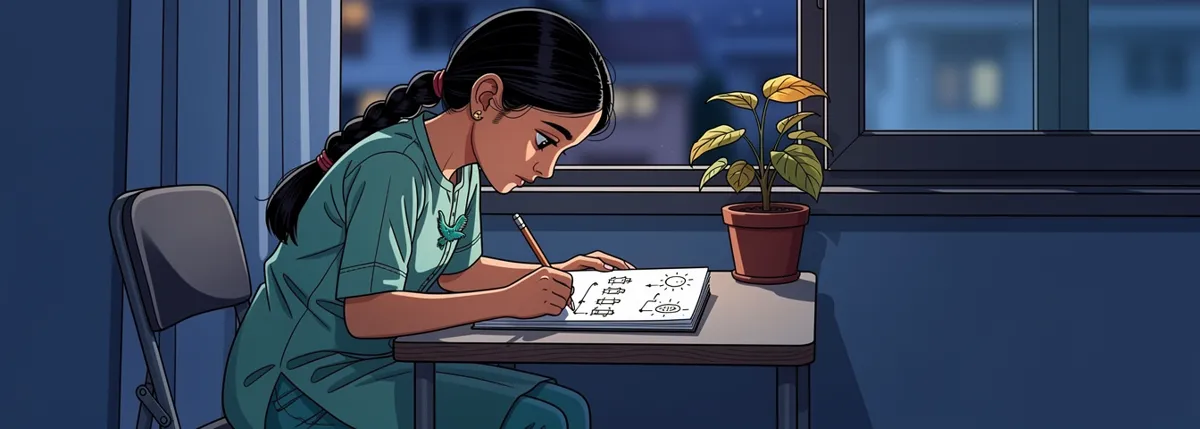
Nila wished she could ask Uncle Charaka one question: when the alarm has gone quiet, what would tell you whether the thing is still there? She wrote her own answer. Wait for the medicine to wear off, and see whether the alarm comes back.
Spot it
1
A plant’s leaves are turning yellow. Appa picks the yellow leaves off, and the plant looks fine again. Did the fix change the leaves, or the thing the leaves were pointing at?
2
A phone keeps showing a message that its storage is full. Each time it appears, someone taps it away. Did the fix change the message, or the thing the message was pointing at?
Look for the shape. In both, only the alarm changed. Whatever made the leaves yellow is still there. The phone is still full. Both alarms will be back.
Before you trust a fix, ask one question. Did it change the alarm, or the thing it points at?
If only the alarm changed, the thing is still there. It will usually come back when the fix wears off.
The name
People who study this call it symptom versus cause. A symptom is the alarm: the part you can see. The cause is the thing the alarm points at, which often you cannot.
You have seen the shape ten times now. The words are new; the shape is not.
Next time a fix makes something go quiet, you know the question: not “is it quiet?” but “what did it change?”
This week, at home
Pick one alarm at home — a beep, a light, a smell. Find out what it actually points at.
Where you will see this next
Next chapter: a feeling is an alarm too. What a fright before a test is pointing at, and how often it rings for nothing.